Meet the Investor Before You Meet the Investment
Investing is not only about finding an investment. It begins with understanding the person who is investing, what the money is meant to accomplish, when it may be needed and what level of risk is appropriate.
Purpose before product. Approach before participation.
Which Investor Do You Recognise?
We don't all approach money in the same way. Some prefer steadiness over excitement. Some are beginning for the first time. Some naturally follow what others are doing. Some look for opportunities, some focus on accumulation, while others are primarily concerned with protecting what they have already built. These are investor archetypes—not labels, and certainly not risk profiles.
You may recognise yourself in one, or perhaps in several. Your behaviour can also change with age, circumstances, goals and experience.
KURMA
The Endurer
“I'd rather move steadily than chase.”
Kurma represents the investor who values patience, continuity and endurance. The objective is not to react to every movement, but to remain aligned with a longer journey and accept that meaningful outcomes often require time.
NOVA
The Newcomer
“I know I should start. Where do I begin?”
Nova represents someone at the beginning of an investment journey—perhaps investing for the first time, returning after a long gap or simply wanting to move from intention to action. The first step is not about knowing everything; it is about understanding enough to begin thoughtfully.
ANUGĀMI
The Trend-Seeker
“Everyone seems to be doing it. Should I?”
Anugāmi represents the tendency to follow what appears popular, familiar or widely discussed. Following a trend is not necessarily wrong, but investing because others are doing so can make it easy to lose sight of one's own purpose, time horizon and risk.
NAME TO BE FINALISED
The Opportunity Seeker
“Is there an opportunity here?”
This archetype is drawn towards emerging possibilities, new ideas and opportunities that may not remain available forever. The challenge is to distinguish a genuine opportunity from the excitement of simply finding something new.
[NAME TO BE FINALISED
The Accumulator
“Let me keep building.”
This archetype is naturally focused on accumulation—saving, investing and steadily adding to the corpus. The strength is persistence; the question is whether accumulation remains connected to a purpose, an eventual use and a clear understanding of what is enough.
NAME TO BE FINALISED
The Guardian
“I don't want to lose what I've built.”
This archetype becomes increasingly concerned with preservation, stability and protecting accumulated wealth. The focus often changes from maximising growth to balancing growth with the need to preserve purchasing power, provide income and protect future responsibilities.
Your Investor Archetype Is Not Your Risk Profile
An investor persona helps describe behaviour and temperament. It does not determine how much investment risk is appropriate for you. Someone who appears conservative may still have a long investment horizon; someone attracted to opportunities may have a low capacity to absorb losses. Risk needs to be considered in the context of the person, the objective, the time available and the investment being considered.
SEBI RISK-O-METER
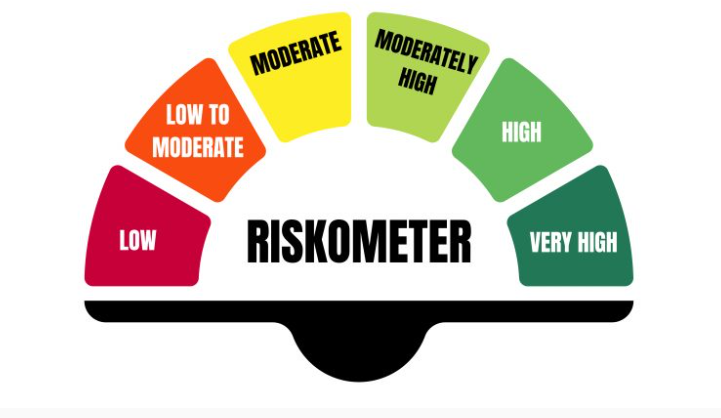
LOW → LOW TO MODERATE → MODERATE → MODERATELY HIGH → HIGH → VERY HIGH
The Risk-o-Meter provides an indication of the level of risk associated with a mutual fund scheme. It should not be confused with an individual's complete risk profile. Understanding both the investment and the investor matters.
What Does Your Money Need to Do?
Before thinking about an investment avenue, give the money a job. Different amounts may have different purposes, different time horizons and different levels of importance. A single portfolio does not necessarily have to serve every purpose in the same way.
Build
Create and accumulate wealth over the long term.
Grow
Seek growth for future needs while allowing time and compounding to work.
Fulfill
Allocate money towards specific goals : education, a home, a major life event or another meaningful objective.
Provide
Create a source of cash flow for living expenses or other recurring requirements.
Preserve
Protect and manage wealth that has already been accumulated, especially when the priority begins shifting towards stability and continuity.
Leave
Think beyond one's own lifetime and consider family, succession, continuity and legacy.