Your Protect What You've Built
Building takes years. Protection begins by asking what could undo it.
We spend years building income, savings, investments, homes, businesses and responsibilities. Yet some events can change the financial picture in a matter of days. Protection is therefore not simply about buying a policy. It is about understanding what could affect your financial life and putting appropriate protection around what matters.
Protection Is Bigger Than Insurance
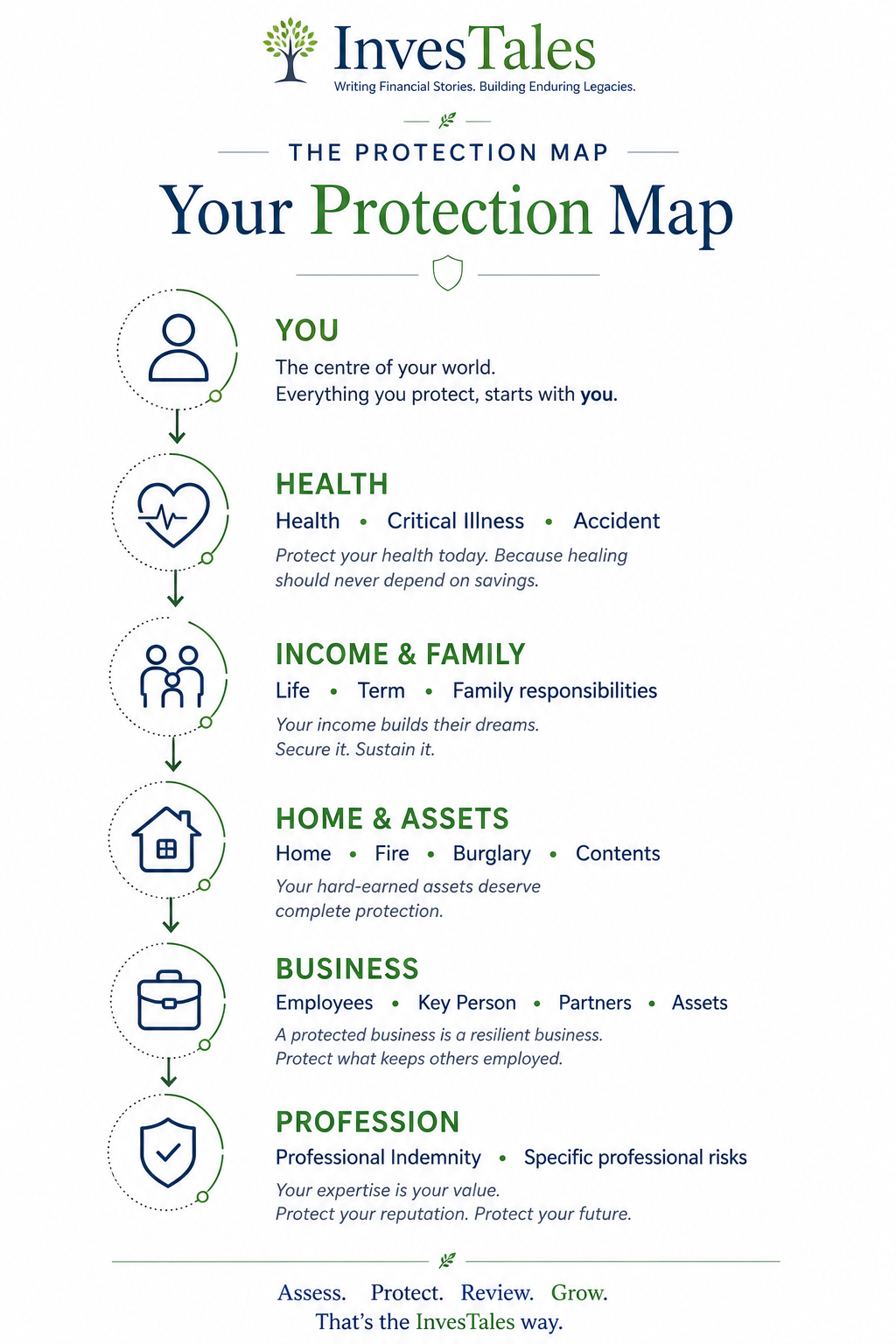
Health, life, income, home, business and professional responsibilities carry different kinds of risks. A family may need health protection today, income protection for tomorrow and life protection for those who depend on it. A business may have employees, partners, key people, premises, liabilities and assets that need protection of their own.
The right question isn't "Which policy should I buy?"
It is "What needs protecting?"
Start With the Person. Then Look at the Risk.
Protection needs change with age, income, family responsibilities, health circumstances, assets, occupation and business commitments. Someone starting a career will have different priorities from a parent with dependent children; a business owner will face risks that a salaried employee may never encounter.
WHO → WHAT → HOW MUCH → FOR HOW LONG
Understanding the person, the exposure, the financial consequence and the period for which protection is needed provides a more meaningful starting point than beginning with a product name.
Health ~ Because the Cost Isn't Always the Illness
A health event can affect more than medical expenses. It can disrupt income, savings, investments and family plans at the same time. Health insurance can help create a financial buffer against eligible medical costs, while the right structure needs to be considered in the context of age, family, coverage requirements, policy terms and future needs.
Health Insurance
Health insurance is not merely about paying hospital bills. A serious medical event can disturb savings, investments, income and even carefully planned family goals at the same time. The right cover should therefore be viewed in the context of who needs protection, the likely meaningful healthcare costs, existing cover, future needs and the policy's actual terms, how the family may be affected, and, how the cover should evolve over time.
Critical Illness
Certain serious illnesses can create a financial need beyond hospitalisation expenses. Critical illness protection is designed around specified conditions and policy terms and can provide a separate financial benefit when applicable.
Personal Accident
Accidents can create consequences ranging from temporary inability to work to permanent disability or loss of life. Personal accident protection addresses specified accidental events and their financial consequences according to policy terms.
Life ~ Protecting the People Behind the Plan
Life insurance becomes particularly important when others depend on your income, your responsibilities or the wealth you are building. The conversation is not merely about a policy amount; it is about understanding the financial obligations that may continue even when the income supporting them does not.
Term Insurance
Term insurance is primarily designed to provide life cover for a specified period. For families depending on an individual's income, it can form an important part of financial protection.
Life Insurance
Different life-insurance structures serve different purposes and have different costs, benefits and conditions. The suitability of any structure depends on the individual's circumstances and objectives.
MWPA
Where applicable, the Married Women's Property Act framework can provide a specific legal structure around certain life-insurance policies and intended beneficiaries. This is an area where the legal implications should be understood carefully and appropriate professional advice obtained where required.
Personal Protection
Home ~ Contents & Other Specified Risks
A home represents years of savings and often carries both emotional and financial significance and may represent one of the largest assets a family owns. Appropriate Protection can therefore involve the structure, contents and specified risks such as fire, burglary and other insured events (relevant to the property), depending on the policy selected and its terms.
Overseas Travel
Travel can introduce medical, accidental and other specified risks away from home. Travel insurance can provide protection for eligible events according to the policy's terms and geographical scope. It's mandatory insurance while one travels abroad.
Business Insurance ~ Protecting the Engine That Creates Income
Employee & Employer Protection
Businesses depend on people. Appropriate group and employee-related protection can support employees while also strengthening the organisation's ability to manage specified risks.
Keyman (key person)
Some individuals carry knowledge, relationships or responsibilities that are particularly important to a business. Key-person protection can address specified financial consequences arising from the loss of such a person.
Partnership / Business Continuity
Partners may want clarity around what happens if one of them dies or becomes unable to continue. Protection structures can form part of broader continuity and succession arrangements.
Business Assets & Property
Premises, equipment, inventory and other business assets may represent significant capital and operational dependency. Their protection needs to reflect the nature of the business and its exposures.
Professional ~ While Work Carries Responsibility
Professional Indemnity
Professionals can face claims arising from alleged errors, omissions or professional shortcomings. Professional indemnity insurance can provide specified protection against eligible claims and associated costs, subject to policy terms.
Professional Indemnity
The appropriate protection depends on the profession, contractual responsibilities, client exposure and regulatory environment. The starting point is understanding the risk rather than selecting a generic policy.
Protection Should Evolve With Life
Protection is not something we buy once and forget. Income changes. Families grow. children become independent. Loans are repaid. Businesses evolve. Assets accumulate. Retirement approaches. Each stage can change what needs protection and how much.
“What are you building? What could disrupt it? What would happen if it did?”
Those questions are often a better place to begin than a catalogue of policies.
Protect what matters. Review what changes. Keep building.